Say Hello To...
Meet TFI’s expert practitioners from around the world and learn what drives them and their work,
how do they address the dimensions of their lives, and what their journey has been like.
amazing takeaways.
Preeti Dmello
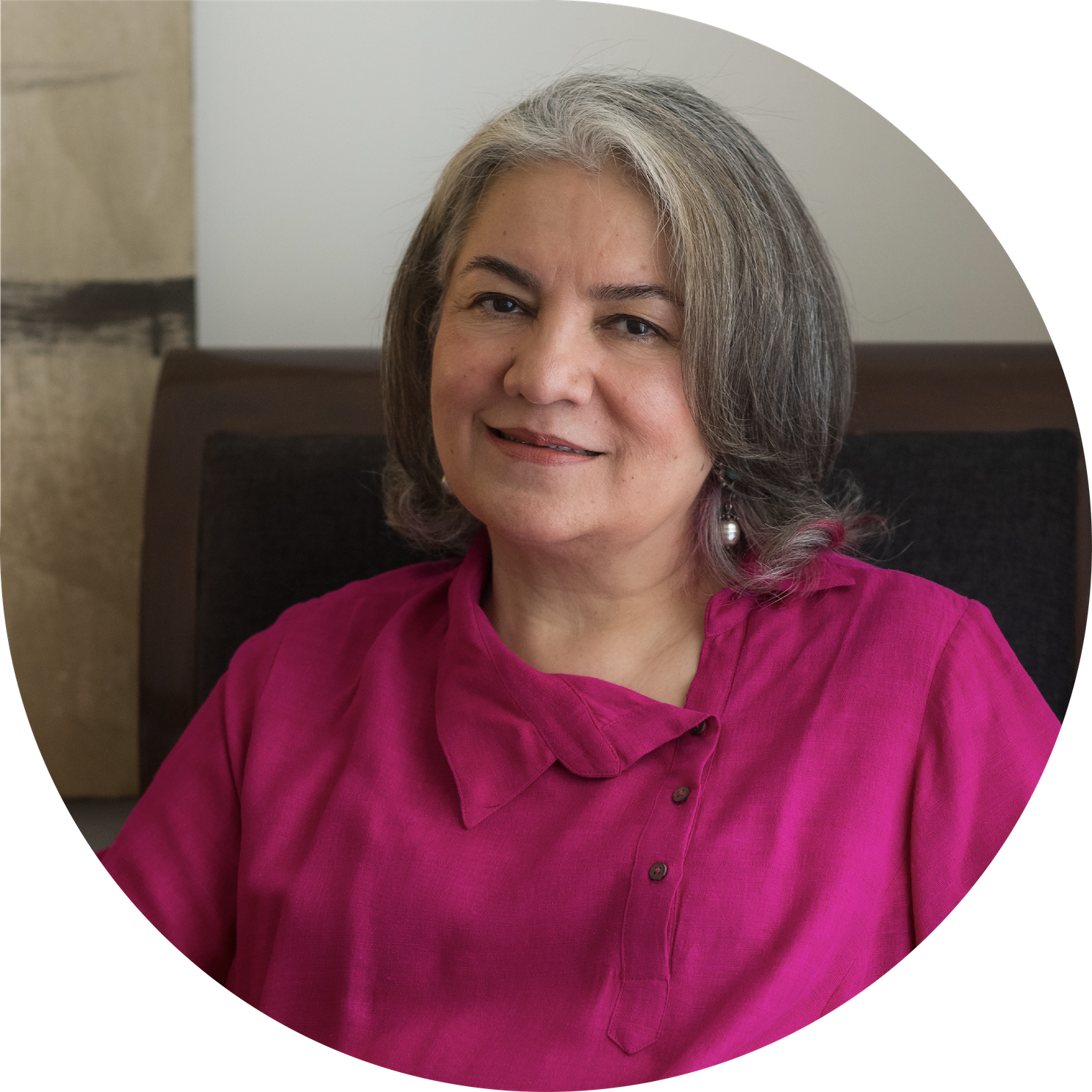
An inspirational leader and coach, someone who believes “there is a better way” to live.
She is at the helm of TFI, translating her vision for Fulfillment into a reality, guiding TFI’s transformative work. Many of you would have spoken to or worked with her, watched her Masterclasses, read her inimitable takes on her LinkedIn profile and elsewhere. And now, you probably are getting insightful nuggets from her Substack sharing.
Always curious about her amazing capacity and perspectives, we posed some critical questions to Preeti, and received deep wisdom that talks of curiosity, courage, trust and willingness.
She is at the helm of TFI, translating her vision for Fulfillment into a reality, guiding TFI’s transformative work. Many of you would have spoken to or worked with her, watched her Masterclasses, read her inimitable takes on her LinkedIn profile and elsewhere. And now, you probably are getting insightful nuggets from her Substack sharing.
Always curious about her amazing capacity and perspectives, we posed some critical questions to Preeti, and received deep wisdom that talks of curiosity, courage, trust and willingness.
Q. What is it that fires you up about the work you are doing?.
The gap—and the courage it takes to close it.
We're living through tremendous complexity right now: AI reshaping work, geopolitical uncertainty, organizations struggling to retain talent, people questioning what success even means. The old models aren't working. It takes courage to say that out loud—and more courage to build something different.I believe there's a better way. One that integrates the wisdom of ancient traditions with what we now know about human development. And I've seen it work, at scale, with real results. That conviction—and the courage to act on it—is what keeps me going.
My practice—and the courage to stay present when everything in me wanted to look away.
When life hasn't gone the way I'd hoped, I return there. Not through denial, but through practice. Through presence. Through the courage to feel what's true and trust that something new can emerge from it.
Q. Your insights are always remarkable. What makes you look and listen closely and think so clearly?
Curiosity, practice, and a willingness to work with what's emerging rather than forcing what I think should happen.
Q. You have done stellar large system work with huge organizations so successfully, YET keeping individual fulfillment at the core. How does that work?
Because they're not separate—and it takes courage to insist on that when conventional wisdom says otherwise.
The results speak: 12,000+ leaders coached, PRISM 2021 recognition, measurable shifts in culture. It works because it addresses the whole picture—and because we had the courage to keep learning as we went.
Q. As a senior and experienced Professional and Practitioner, what would you look for in a Leader and in a Coach?
In a leader: courage and the capacity for self-mastery.
Technique teaches you what to say. Presence teaches you how to be. Courage lets you stay when it gets uncomfortable. All three matter—but together, they make the work sacred.
Say Hello to
Preeti Dmello
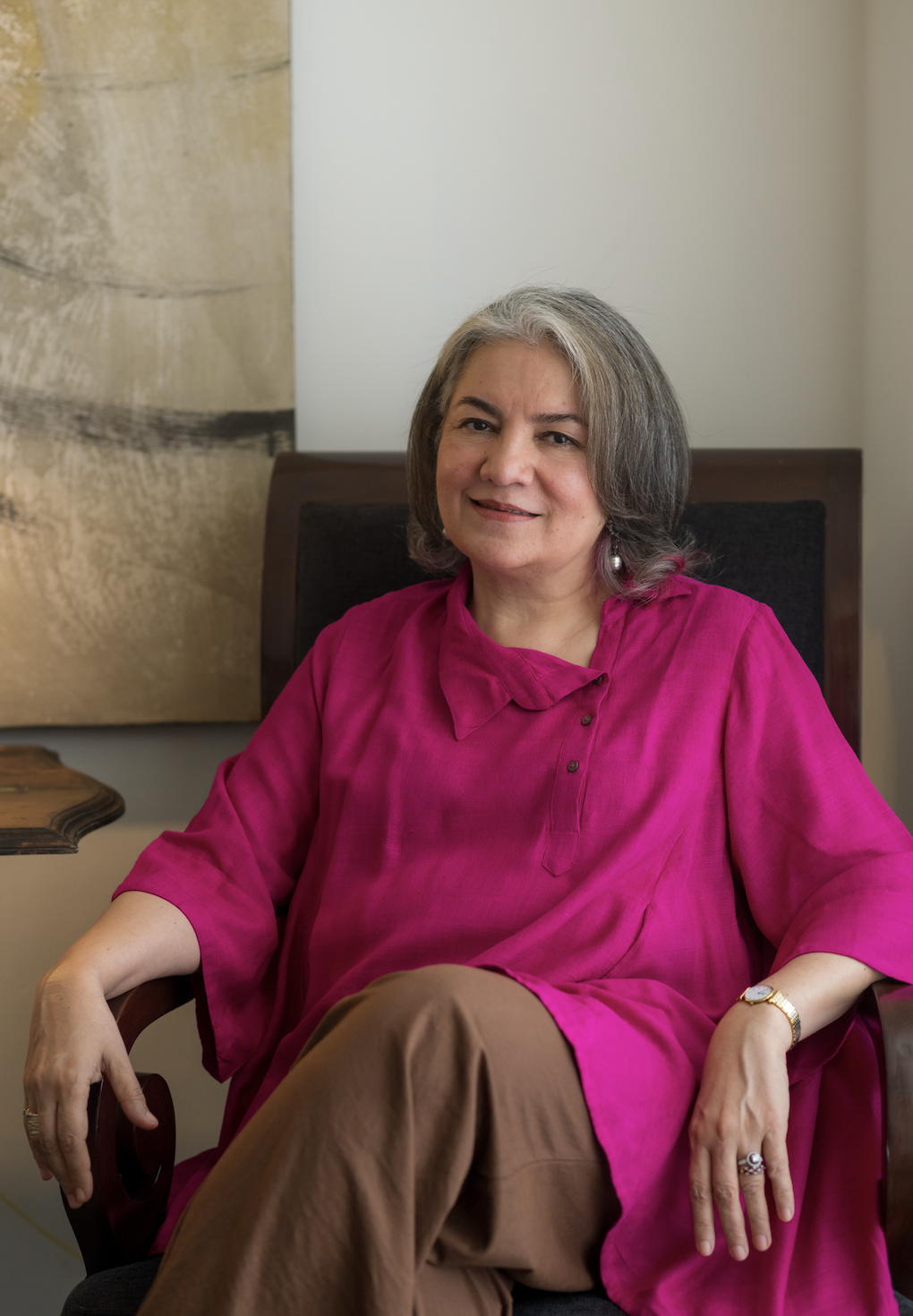
Q. In life's journey, what has helped you pick yourself up and reclaim life when it hasn't gone the way you would have liked?
Q. Your insights are always remarkable. What makes you look and listen closely and think so clearly?
Q. You have done stellar large system work with huge organizations so successfully, YET keeping individual fulfillment at the core. How does that work?
Q. As a senior and experienced Professional and Practitioner, what would you look for in a Leader and in a Coach?
Anita Vasudeva
Preeti D’mello
Preeti’s career of over 35 years spans several industries and sectors – IT Services, Education & Training, International Business, Education Consulting and Publishing. She recently completed a decade-long stint as the Chief Diversity Officer and Global Head of Organizational Development, Leadership Development (LeaD Academy), Coaching, Diversity (DEI) and Culture at TATA Consultancy Services (TCS), where she played a key role in significantly changing the trajectory of DEI with a simple motto – “Inclusion without Exception.” She established the Global Coaching Centre of Excellence as a part of the LEAD Academy and led the DEIJB function as Global Head. Her work is the recipient of the PRISM Award, a gold standard in Coaching from ICF.
Satyashiv D’mello
Shiv is also Founder and Director at YouUbuntu Foundation, a nonprofit that focuses on wellbeing.
Siddharth Arora
Siddharth views technology as a powerful enabler of personal development and was inspired by TFI’s vision of leveraging digital tools to make coaching and self-improvement accessible to a global audience.
The TFI Difference

- Hold advanced certifications from the International Coach Federation and other premier coaching bodies.
- Bring decades of organizational coaching experience across diverse industries and leadership levels.
- Continuously pioneer innovative coaching approaches based on emerging research and best practices.
Richard Boyatzis
Dr. Anna Tavis
Prior to joining the NYU faculty, Dr. Tavis navigated a diverse global career in business, consulting and academia. In business, Dr. Tavis was the Head of Motorola’s EMEA OD function based in London, Nokia’s Global Head of Talent Management based in Helsinki, United Technologies Corporation’s Chief Learning Officer, and she was the Global Head of Talent and Organizational Development with AIG Investments. In academia, Dr. Tavis was on the faculty at Columbia University, Williams College, and Fairfield University.
Two of Dr. Tavis’ Harvard Business Review articles in collaboration with Dr. Peter Cappelli : “HR Goes Agile” (2018) and “The Performance Management Revolution” (2016) were published in HBR’s “Must Reads” (2016 & 2018), and “Definitive Management Ideas of the Year” (2016 and 2018) and in “Agile: The Insights You Need from Harvard Business Review” (2020).
Dr. Tavis is a frequent presenter at international conferences on the topics of Future of Work; People Analytics and Technology; Employee Experience; and Intelligent Automation in the Workplace. She is a Senior Fellow with the Conference Board and is the Academic in Residence with Executive Networks. She is the former Executive Editor of People+Strategy Journal, a publication of SHRM’s Executive Network and she is currently an Associate Editor of Workforce Solutions Review, a publication of the International Association for Human Resource Information Management and The Journal of Total Rewards, a publication of WorldatWork.
- Multiple perspectives illuminate complex realities and generate richer solutions.
- Competing worldviews, when authentically engaged, create more complete understanding.
- Mutual exchanges create value greater than what any individual could achieve alone.
- Interdependent relationships foster innovation and sustainable growth for all involved.
- Self-direction creates meaningful, lasting impact.
- Freedom includes accountability for our choices.
- Developing and applying skills fulfills our innate drive for mastery and purpose.
- Skillful contribution enhances personal efficacy and collective capabilities.
- Exploring beyond comfort zones unlocks transformative value for individuals and systems.
- New perspectives reshape our understanding of possibilities and potentials.
- Exploring beyond comfort zones unlocks transformative value for individuals and systems.
- New perspectives reshape our understanding of possibilities and potentials.
- BCG Study cited by Hampel, S.. (2023a, January 24). The 7 benefits of a diverse and inclusive workplace. Inkling.
- Deloitte Human Capital Trends, 2023. 2025 Global Human Capital Trends. https://www2.deloitte.com/us/en/insights/focus/human-capital-trends.html
- Achleithner, 2023; The Role of Employer Branding in Talent Attraction and Retention, n.d. https://nutrium.com/blog/how-well-being-programs-can-affect-employer-branding/
Stephen Badger
Karl Seitz
Jan Rybeck
Ananya Mishra
Raabia Shafi
Inely Cesna
Oona Shambhavi
Lisa May
Jessie Kaur
Bosco D’mello
Bosco has worked extensively with senior leaders across industries, including IT Services, Consumer Durables, Manufacturing, and Financial Services. He has also contributed as a subject matter expert for organizations such as PwC, FICCI, and SHRM. Bosco holds a Master’s in Positive Organization Development from Case Western Reserve University, along with certifications from Harvard, MIT Sloan, and the Gestalt Institute of Cleveland. He complements his professional practice through teaching at institutions including TISS and the Schulich School of Business.
At the heart of his work is a belief in bridging inner and outer life—helping individuals and organizations align who they are with who they can become, enhancing both human and business impact.
Inika Hazarika
Gautam Tarkunde
Melissa Kelly McCabe
Rhea Baweja
At her core, Rhea is driven by clarity—of voice, message, and purpose. She thrives in ambiguity, moves seamlessly between strategy and execution, and believes the right words—deliberate and well-timed—can shape how people think, feel, and act.
Webinar Alert
Tim Carr
Candice Frankovelgia
Michael Devlin
Sreela Das Gupta
Sally Breyley Parker
Sally brings over three decades of pioneering work applying nature's strategies to human systems transformation. As a Gestalt-certified coach, Certified Biomimicry Specialist, and faculty at the Gestalt Institute of Cleveland, she guides individuals, teams, organizations, and cross-sector networks to unleash their innate capacity for flourishing. Her award-winning approach integrates biomimicry, polarity thinking, design thinking, and Theory U, helping systems at every level operate as the living systems they truly are—creating regenerative value while thriving through uncertainty and change.
Andrew Powell
Shalin Salecha
Misha Kohli
Surbhi Solanki
Margot Esther Borden
Gurpreet Kalra
Meha Haria
Ashar Khan
Cameron Wilk
Professional Services
Urvashi Gunani
Toni Benner
DYNAMIC teaming about me: